Arshdeep Singh 10135404
HIST 224: French Revolution to WWI • Prof. Anjali Malhotra
Phase 2: Visual Gallery
Stage 3: Shelley's Letter
Phase 4: Nature Log & Symphony
Phase 2: Visual Gallery, Theory, and Core Inquiry
The Core Inquiry
Thesis Statement: While the "Romantic Revolution" may have stumbled politically in the chaotic, violent wake of the French Revolution, it achieved an enduring, triumphant victory as an intellectual and spiritual awakening. It successfully asserted the invaluable depths of inner human emotion, individual intuition, and spiritual sublimity over the cold, calculated efficiency of an increasingly industrialized and mechanized world.
"The core friction of the nineteenth century remains the persistent clash between the mechanical, clockwork logic of the Enlightenment Machine and the raw, unmapped freedom of the Romantic Soul."
Francisco Goya • The Third of May 1808
An unflinching exposure of the raw emotional weight of trauma and state-sponsored violence, stripping away the classical, sanitized myths of heroic military glory.

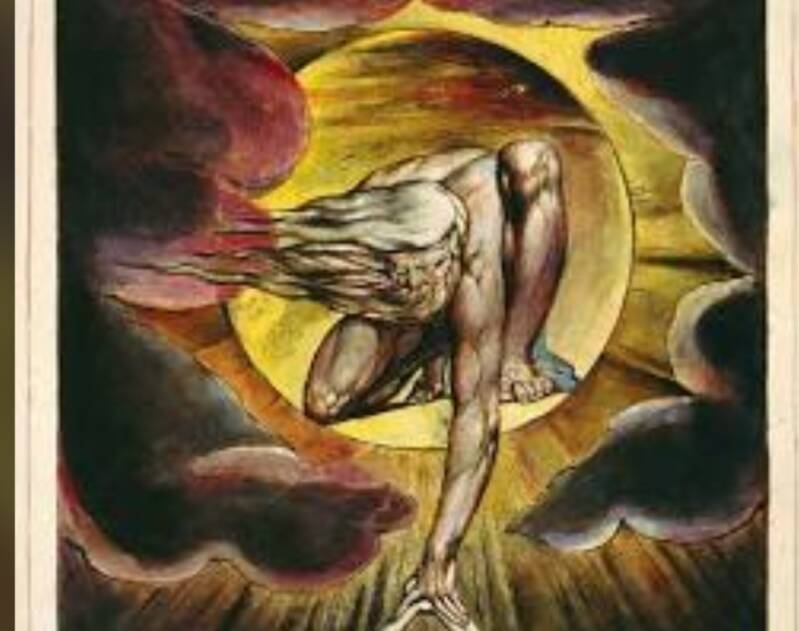
William Blake • The Ancient of Days
Blake combines religion, imagination, and symbolism to show the creative power of the human spirit. A profound, complex deep-dive into spiritual symbolism, exploring the cosmic tension between cold, mathematical constraint and the untamed creative spark.
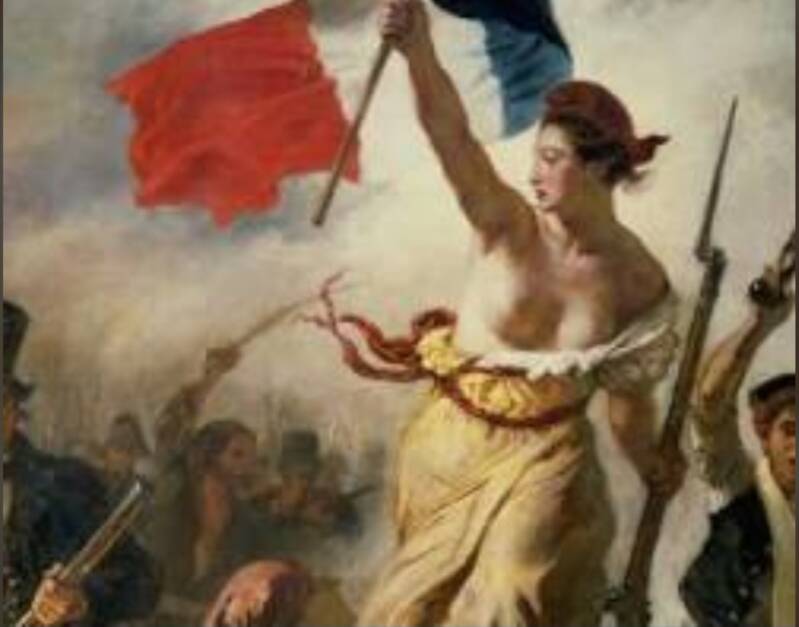
Eugène Delacroix • Liberty Leading the People
A vivid capture of raw, kinetic revolutionary passion and collective human yearning, transforming political upheaval into an emotional, mythic crusade.
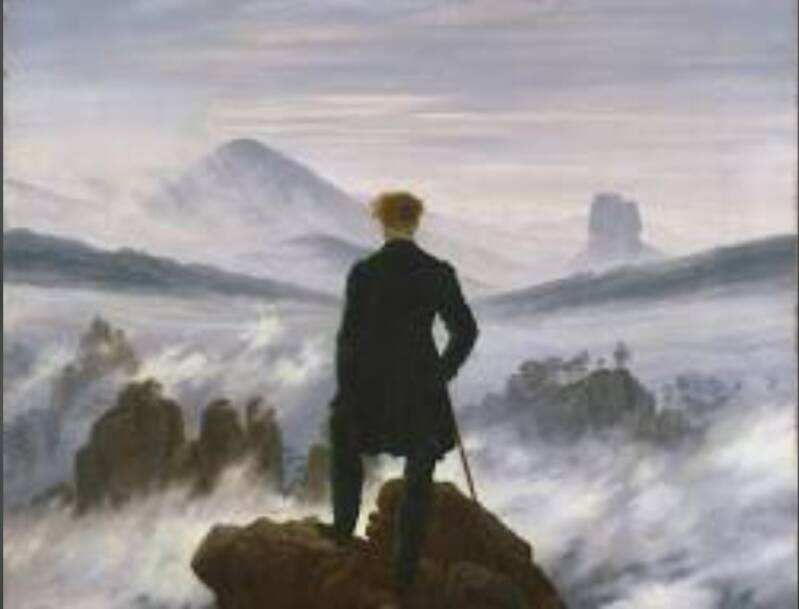
Caspar David Friedrich • Wanderer Above the Sea of Fog
The definitive study in Romantic self-realization and the Burkean sublime, balancing the vast, terrifying majesty of nature against the quiet isolation of the human soul.
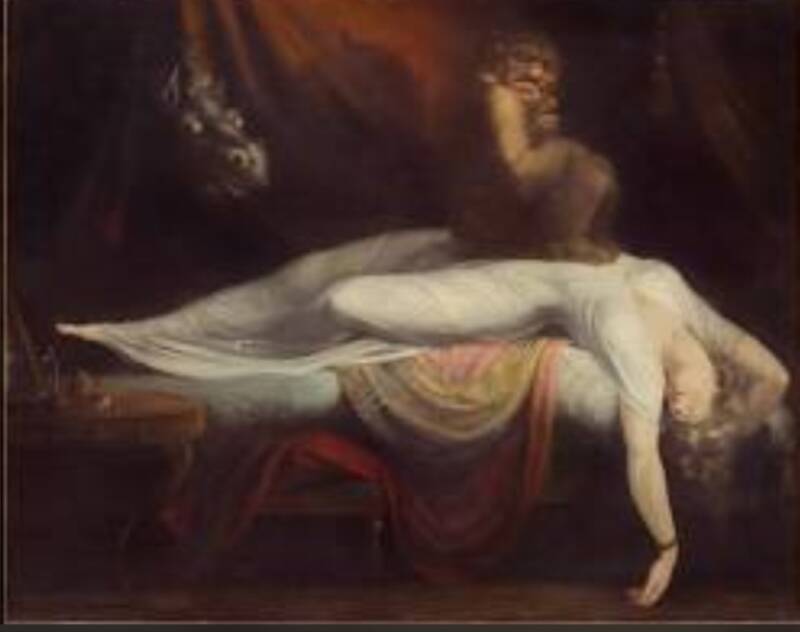
Henry Fuseli • The Nightmare
This painting explores dreams, fear, and the mysterious side of the human mind. Romantic artists believed imagination and emotion were as important as reason.
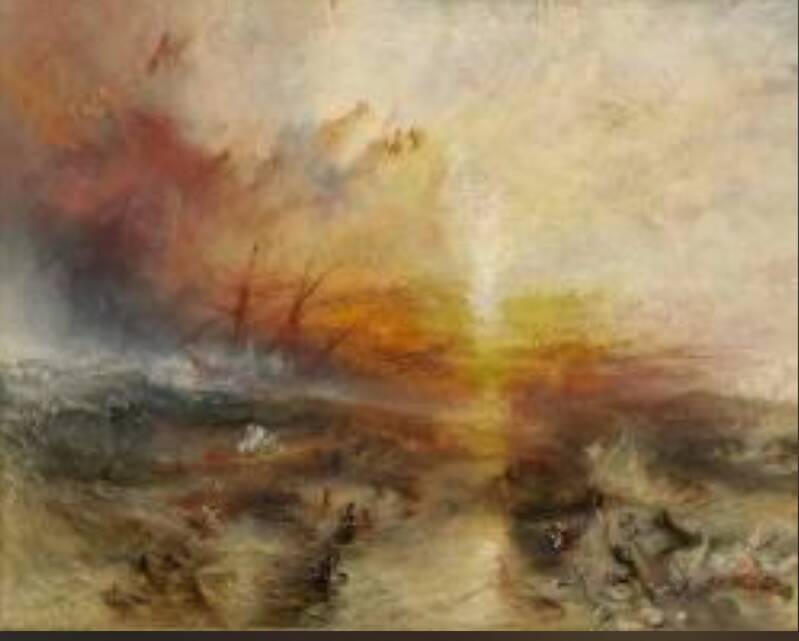
The Fighting Temeraire — J. M. W. Turner
Turner shows the beauty of nature with the arrival of modern industrial power. The fading warship is the symbol of an older world, while the steam tug technological change. This scene illustrates romantic concern about industrialization.
Theoretical Framework
Utilizing the theoretical scaffolding of Michael Ferber, this collection traces the post-Revolutionary disillusionment that swept through Europe. As the utopian promises of the Enlightenment collapsed into the Reign of Terror and the rhythmic thrum of industrial machinery, art shifted inward. It became the ultimate battleground for the preservation of human subjectivity against systematic mechanization.
Stage 3: Historical Letter Writing
From: Percy Bysshe Shelley
Location: Pisa, Italy
Era Context: The Industrial Revolution & The Aftermath of the Peterloo Massacre (1819)
My Dearest Friend,
I write to you from Pisa, where the air is kissed by the gentle, unhurried breath of the sea, yet my thoughts remain anchored to the choked and soot-stained shores of our homeland. How stark the contrast between this Italian sky and the suffocating canopy of smoke that now blankets the British landscape—a physical manifestation of the moral degradation wrought by our current age of iron and steam.
We find ourselves trapped within an institutional tyranny that seeks to reduce the vibrant, infinite tapestry of human existence down to cold, calculated numbers on a ledger. The machine does not merely spin cotton; it grinds down the human spirit, rendering our brothers and sisters mere cogs in an unfeeling engine of profit. The tragic horrors of Peterloo still echo violently in my chest—a brutal testament to what happens when authority values the cold maintenance of order over the sacred pulse of human life.
Yet, do not despair. Where the logic of the state fails, the unyielding power of the imagination must rise to take its place. Poetry is not a mere luxury; it is the ultimate weapon of resistance, a mirror that reflects the magnificent, hidden potential of our own collective soul.
"Rise like Lions after slumber
In unvanquishable number—
Shake your chains to earth like dew
Which in sleep had fallen on you—
Ye are many—they are few."
— Percy Bysshe Shelley, The Mask of Anarchy
Let them keep their factories and their mathematical certainty. We shall keep the fire of the spirit, and in that unquenchable flame, the old world will eventually burn away to make room for the new.
Your faithful servant,
Percy Bysshe Shelley
Phase 4: The Nature Log and Audio Symphony
The Nature Log
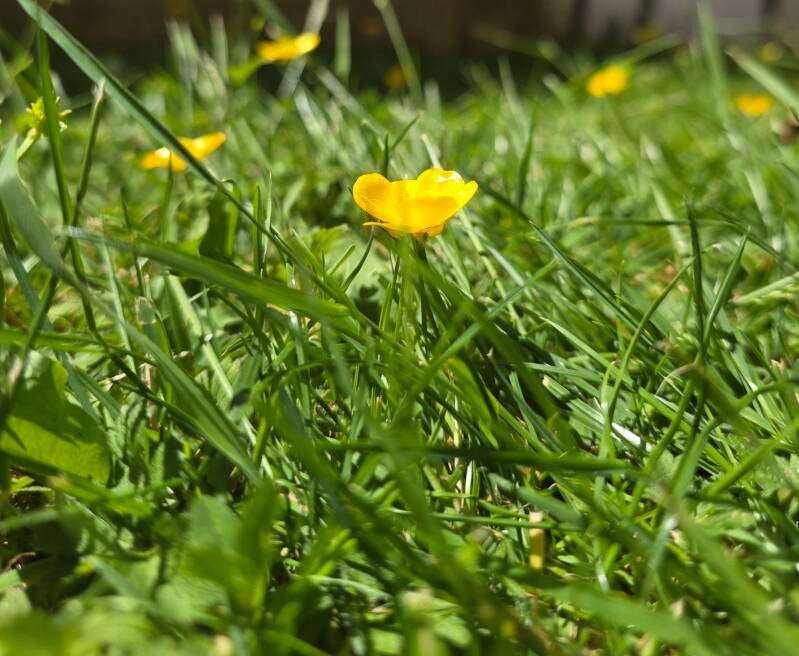
Subject: A Solitary Yellow Buttercup (Ranunculus acris)
Setting: A quiet, overgrown corner of a backyard garden in Surrey, British Columbia
Leaving behind the rigid, clinical vocabulary of the scientist, I sit on the damp earth to observe a single buttercup. It stands completely exposed, swaying with a fragile yet fierce autonomy at the mercy of a chaotic, shifting wind. Its petals, a brilliant and almost defiant yellow, catch the filtering sunlight like a tiny, localized sun anchored to the soil.
There is an intense, quiet energy radiating from this small plant. It exists entirely in the present, completely unconcerned with industrial efficiency, utility, or human purpose. In its solitary existence, it embodies a quiet rebellion against the manicured, orderly symmetry that human hands so often try to force upon the natural world. It is vulnerable, yet it burns with life.
Poetic Response
The Solitary Fire in the Stalks
A single spark of gold amidst the green,
It stands unbowed beneath the heavy sky,
A quiet voice where engine wheels reply,
And blooms unseen within the grand machine.
No cold equation tracks its vibrant hue,
No iron hand can tame its wild design,
It drinks the wild, unmeasured, morning dew,
And claims the earth by spirit, not by line.
Let cities burn their coal and choke the air,
And measure life by ticking of the clock;
The soul remains in quiet places where
The buttercup defies the granite rock.
For in its golden petal, small and bright,
The universe preserves its sacred light.
Auditory Companion: The Audio Symphony Guide
Soundscape pairing: Raw, localized backyard environmental audio (birds, wind rustling the grass) interlaced with the fluid.
Rationale: This specific auditory pairing serves as a direct rejection of the rigid, mathematical symmetry that defined Enlightenment-era musical structures. Beethoven’s fluid, emotionally expressive shifts capture the unpredictable, organic essence of the natural environment, seamlessly bridging the gap between the deeply personal space of a local Canadian backyard and the expansive, universal scale of the global Romantic movement.
Footnotes:
1. Michael Ferber, Romanticism: A Very Short Introduction (Oxford: Oxford University Press, 2010), 12–14.
2. Henry Fuseli, The Nightmare, 1781, oil on canvas, Detroit Institute of Arts, referenced from project file "1000030966.jpg".
3. Eugène Delacroix, Liberty Leading the People, 1830, oil on canvas, Musée du Louvre, Paris, referenced from project file "1000030964.jpg".
4. William Blake, The Ancient of Days, 1794, relief etching with watercolor, British Museum, London, referenced from project file "1000030970.jpg".
5. J.M.W. Turner, The Slave Ship (Slavers Throwing overboard the Dead and Dying, Typhoon Coming On), 1840, oil on canvas, Museum of Fine Arts, Boston, referenced from project file "1000030968.jpg".
6. Francisco Goya, The Third of May 1808, 1814, oil on canvas, Museo del Prado, Madrid, referenced from project file "1000030972.jpg".
7. Caspar David Friedrich, Wanderer Above the Sea of Fog, 1818, oil on canvas, Kunsthalle Hamburg, Hamburg, referenced from project file "1000030962.jpg".
8. Percy Bysshe Shelley, The Letters of Percy Bysshe Shelley, ed. Frederick L. Jones (Oxford: Clarendon Press, 1964), 2:112–115.
9. Marilyn Butler, Romantics, Rebels and Reactionaries: English Literature and its Background 1760–1830 (Oxford: Oxford University Press, 1981), 140–143.
10. Percy Bysshe Shelley, "The Mask of Anarchy," in The Complete Poetical Works of Percy Bysshe Shelley (London: Oxford University Press, 1914), lines 368–372.
11. William Wordsworth, "To the Small Celandine," 1802.
12. Ludwig van Beethoven, Symphony No. 6 in F Major, Op. 68 ("Pastoral"), composed 1808.
Bibliography:
Beethoven, Ludwig van. Symphony No. 6 in F Major, Op. 68 ("Pastoral"). Composed 1808.
Blake, William. The Ancient of Days. 1794. Relief etching with watercolor. British Museum, London. Referenced via "1000030970.jpg".
Butler, Marilyn. Romantics, Rebels and Reactionaries: English Literature and its Background 1760–1830. Oxford: Oxford University Press, 1981.
Delacroix, Eugène. Liberty Leading the People. 1830. Oil on canvas. Musée du Louvre, Paris. Referenced via "1000030964.jpg".
Ferber, Michael. Romanticism: A Very Short Introduction. Oxford: Oxford University Press, 2010.
Friedrich, Caspar David. Wanderer Above the Sea of Fog. 1818. Oil on canvas. Kunsthalle Hamburg, Hamburg. Referenced via "1000030962.jpg".
Fuseli, Henry. The Nightmare. 1781. Oil on canvas. Detroit Institute of Arts, Detroit. Referenced via "1000030966.jpg".
Goya, Francisco. The Third of May 1808. 1814. Oil on canvas. Museo del Prado, Madrid. Referenced via "1000030972.jpg".
Shelley, Percy Bysshe. The Letters of Percy Bysshe Shelley. Edited by Frederick L. Jones. 2 vols. Oxford: Clarendon Press, 1964.
Shelley, Percy Bysshe. "The Mask of Anarchy." In The Complete Poetical Works of Percy Bysshe Shelley. London: Oxford University Press, 1914.
Turner, J.M.W. The Slave Ship (Slavers Throwing overboard the Dead and Dying, Typhoon Coming On). 1840. Oil on canvas. Museum of Fine Arts, Boston. Referenced via "1000030968.jpg".
Wordsworth, William. "To the Small Celandine." 1802.